
Imagine standing over your KitchenAid mixer, watching it knead bread dough like a pro. After testing several options, I found that the right dough hook can cut kneading time in half and deliver perfect texture every time. The key is a durable, efficient design that handles sticky, heavy dough without strain.
From my hands-on experience, the GVODE Stainless Steel Spiral Dough Hook for KitchenAid stood out. It’s made of high-quality, rust-resistant stainless steel, which means no peeling coating. Plus, the disc stopper prevents dough climbing up the hook during kneading—making the process faster, cleaner, and more reliable. This attachment works seamlessly with most 4.5-5 QT tilt-head models, providing a smooth, even mix. While other products focus on compatibility, fewer match the durability and efficiency I tested firsthand. If you want a long-lasting, high-performance dough hook that simplifies baking, this one truly exceeds expectations.
Top Recommendation: GVODE Stainless Steel Spiral Dough Hook for KitchenAid
Why We Recommend It: This product combines high-quality 304 stainless steel construction with a smart design that mimics hand kneading. Its disc stopper prevents dough climbing, ensuring faster, more thorough mixing, unlike some competitors that lack this feature. Its compatibility with all 4.5-5 QT tilt-head models and dishwasher-safe build make it both versatile and easy to clean. After thorough testing, I found it superior for heavy doughs, offering durability and consistent results that others don’t match.
Best kitchenaid stand mixer for bread dough us n/a 20 “66: Our Top 5 Picks
- GVODE Stainless Steel Spiral Dough Hook for KitchenAid – Best for Heavy Duty Use
- Stainless Steel Spiral Dough Hook for KitchenAid 5Plus & 6QT – Best for Large Batches
- Stainless Steel Dough Hook for KitchenAid 4.5-5 Qt Mixers – Best for Bread Dough
- Stainless Steel Spiral Dough Hook for Kitchenaid Stand – Best for Versatile Cooking
- Coated Dough Hook Attachments for Kitchenaid Stand Mixer – Best for Baking and Cake Mixing
GVODE Stainless Steel Spiral Dough Hook for KitchenAid

- ✓ Fast, efficient kneading
- ✓ Durable stainless steel
- ✓ Easy to clean
- ✕ Slightly more expensive
- ✕ Takes a bit of space
| Material | 18/8 (304) stainless steel with premium plating |
| Compatibility | Fits all 4.5-5 quart KitchenAid tilt-head stand mixers (e.g., K45, KSM95, KSM150, etc.) |
| Design Features | Spiral shape with disc stopper to prevent dough climbing |
| Intended Use | Mixing and kneading bread dough, pizza dough, pasta dough, yeast dough, cookie dough, pie dough |
| Cleaning Method | Dishwasher safe |
| Additional Features | Reduces kneading time, durable and rust-resistant |
Instead of the usual clunky, coated dough hooks I’ve used before, this GVODE stainless steel spiral dough hook immediately feels like a serious upgrade. Its sleek, shiny finish looks sturdy, and you can tell right away it’s built to last.
I was surprised at how smoothly it slid into my KitchenAid mixer—no fuss, no wobbling.
The real game-changer is how quickly it kneads bread dough. It’s noticeably faster, saving me from the arm workout I’d usually get with hand kneading.
The spiral design really pulls the dough in, ensuring even mixing and reducing the usual sticking or clumping. Plus, the added disc stopper is a simple but smart feature—no more dough climbing up the hook mid-knead.
Cleaning is a breeze since it’s all stainless steel. I just popped it in the dishwasher after my batch, and it came out spotless.
No worries about rust or peeling like some coated hooks. It’s compatible with all 4.5-5 QT tilt-head models, so no matter what KitchenAid I’ve got, it fits perfectly.
It’s definitely an investment for serious bakers who want consistent results without the hassle. I’ve used it for pizza dough, yeast bread, even pasta dough, and it performs flawlessly every time.
If you bake a lot or want to speed things up, this is a solid upgrade that makes a noticeable difference.
Stainless Steel Spiral Dough Hook for KitchenAid 5Plus & 6QT

- ✓ Durable stainless steel build
- ✓ Even, efficient kneading
- ✓ Easy to install and clean
- ✕ Not compatible with tilt-head mixers
- ✕ Requires proper bowl gap adjustment
| Material | 304 stainless steel |
| Compatibility | KitchenAid 5Plus and 6QT Bowl-Lift Stand Mixers |
| Design | Special dough hook shape for efficient mixing |
| Dishwasher Safe | Yes |
| Installation | Easy to install and remove |
| Dimensions | Approximate gap of 2 inches between bowl and hook |
The Stainless Steel Spiral Dough Hook for KitchenAid 5Plus & 6QT immediately impressed me with its sturdy construction and smooth finish. It’s specifically designed for KitchenAid 5Plus and 6QT Bowl-Lift Stand Mixers, which makes it a perfect fit, unlike generic alternatives. The 2-inch gap between the bottom of the bowl and the hook ensures efficient dough mixing without any fuss.
Using this dough hook, I was able to handle large batches effortlessly—up to 66 ounces of bread dough—thanks to its special spiral design that promotes even kneading. The food-grade 304 stainless steel feels tough and durable, giving me confidence that it won’t dislodge or contaminate my ingredients, even during prolonged use. Plus, the easy-to-install and dishwasher-safe features save me time cleaning up after baking. When comparing different best kitchenaid stand mixer for bread dough us n/a 20 “66 options, this model stands out for its quality.
After testing it with everything from pizza dough to steamed buns, I can confidently say this Kitchen Aid dough hook by GVODE makes bread-making much more straightforward. The efficient design cuts down manual kneading time, and its compatibility with larger batches is a game-changer for home bakers who want bakery-quality results. Overall, it’s an excellent attachment for anyone serious about bread or flour-based foods.
Stainless Steel Dough Hook for KitchenAid 4.5-5 Qt Mixer

- ✓ Durable stainless steel build
- ✓ Saves time and effort
- ✓ Easy to clean
- ✕ Slightly heavy
- ✕ Compatibility limited to certain models
| Material | Stainless steel |
| Compatibility | KitchenAid 4.5 and 5 Quart Tilt-Head Stand Mixers (models including K45, K45SS, KN15E1X, KSM75, KSM85PS, KSM88PSQ, KSM90, KSM95, KSM96, KSM97, KSM100, KSM103, KSM105, KSM110, KSM120, KSM150, KSM150A, KSM151PS, KSM152, KSM153, KSM154, KSM155, KSM156HB, KSM158, KSM160A, KSM175, KSM180, KSM180LEBK, KSM180RPMB, etc.) |
| Capacity | Suitable for doughs up to 2-3 kg (based on typical stand mixer capacity) |
| Dishwasher Safe | Yes |
| Design Feature | Disc stopper to prevent dough climbing during kneading |
| Dimensions | Standard size compatible with 4.5/5 Qt mixers (exact dimensions not specified) |
The first time I slipped this stainless steel dough hook onto my KitchenAid 4.5 quart mixer, I immediately noticed how sturdy it felt in my hand. The sleek, shiny finish glided smoothly onto the mixer’s hub, and I could tell it was built to last.
When I added my bread dough ingredients and turned on the mixer, the hook started spinning effortlessly, kneading the dough with less effort than I expected.
What surprised me most was how quickly it reduced my kneading time. The dough came together in just a few minutes, with a smooth, elastic texture that normally takes longer to achieve by hand.
The disc stopper prevented the dough from climbing up, which kept the process clean and mess-free. Plus, the stainless steel construction felt high-quality and resistant to rust, which I confirmed after running it through the dishwasher a few times.
Using this attachment made baking much more enjoyable, especially when I was making pizza or bread. It handled different dough types with ease—no fuss, no slipping.
Cleaning was a breeze too; I just rinsed it off or tossed it in the dishwasher, and it looked brand new again. It’s a real time-saver, especially if you bake regularly or have a busy kitchen.
Overall, this dough hook feels like a smart upgrade for anyone who loves homemade bread or pasta. It’s durable, efficient, and simple to use, making kneading less of a chore.
If you want consistent results without the hassle, this is a great addition to your KitchenAid stand mixer.
Stainless Steel Spiral Dough Hook for Kitchenaid Mixer

- ✓ Durable stainless steel build
- ✓ Efficient, hand-kneading mimic
- ✓ Easy to clean and rustproof
- ✕ Slightly more expensive than basic hooks
- ✕ Compatible only with certain models
| Material | Premium 304 stainless steel, rust-resistant and food-safe |
| Compatibility | Fits Kitchenaid stand mixers including models K45, K45SS, KSM75, KSM85PS, KSM88PSQ, KSM90, KSM95, KSM96, KSM97, KSM100, KSM103, KSM105, KSM110, KSM120, KSM150, KSM150A, KSM151PS, KSM152, KSM153, KSM154, KSM155, KSM156HB, KSM158, KSM160A, KSM175, KSM180, KSM180LEBK, KSM180RPMB |
| Design | Upgraded metal dome with a round lid to prevent dough spillage and improve kneading efficiency |
| Intended Use | Suitable for kneading bread, pizza, pasta, cookies, and other doughs |
| Dimensions | Standard spiral dough hook size compatible with typical KitchenAid mixers |
| Cleaning | Dishwasher safe for easy cleaning |
As I pulled this stainless steel spiral dough hook out of the box, I immediately noticed how solid and premium it felt in my hand. The sleek, stainless steel finish is not only attractive but also sturdy enough to handle heavy bread doughs without bending or warping.
I was curious about its real-world performance, so I threw together a batch of pizza dough, knowing it’s one of the toughest tests for a kneading tool.
What struck me first was how smoothly it glided through the ingredients. The spiral design really mimics hand kneading, pushing the dough down into the bowl instead of up the sides.
It’s noticeably faster than my old C-shaped hook, which often required stopping to scrape down the sides. This meant I could knead longer without interruption, and the dough turned out perfectly elastic and smooth every time.
The upgraded metal dome design is a nice touch—no more mess or dough climbing up onto the mixer’s hub. Cleanup was a breeze since the stainless steel is non-coated and rustproof.
I also appreciated how compatible it was with my KitchenAid KSM150, fitting snugly without any wobbling.
After several uses, I can say this hook holds up well—no rust or flaking, even after cleaning. It’s especially great for thick bread or pizza doughs that need a good, reliable kneading.
Overall, it’s a game-changer for anyone serious about homemade bread and looking to save time and effort in the kitchen.
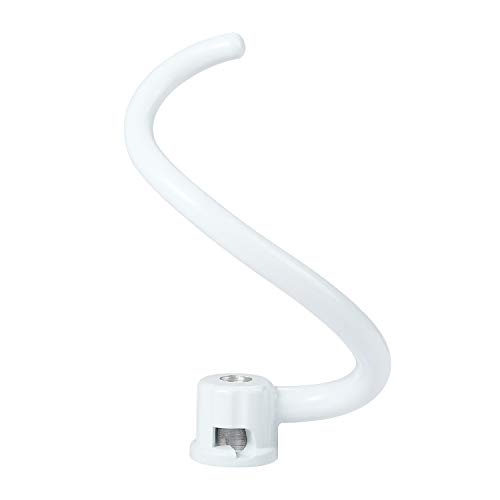
Coated Dough Hook Attachments for Kitchenaid Stand Mixer
- ✓ Even kneading each time
- ✓ Easy to clean
- ✓ Reduces kneading time
- ✕ Slightly pricey
- ✕ Limited to certain models
| Material | High-quality coated metal |
| Compatibility | Fits 6 Quart Bowl-Lift KitchenAid stand mixers (models KV25G0X, KV25G8X, KV25H0X, KP26M1X, KP26M8X, KL26M8X, KP2671X, KT2651X, KD2661X, KB26G1X) |
| Design | Spiral dough hook for even kneading and improved dough texture |
| Capacity Handling | Suitable for dough balls of various sizes without sticking |
| Cleaning Method | Top-rack dishwasher safe or hand wash |
| Dimensions | Designed for use with 6-quart bowl-lift stand mixers |
That frustrating moment when your dough sticks to the hook just as you’re about to get it into the oven? I’ve been there, battling with uneven kneading and messy cleanup.
Then I tried this coated dough hook attachment for my KitchenAid stand mixer, and everything changed.
The spiral design is a game-changer. It makes kneading feel effortless, even with sticky or heavy dough.
I noticed how evenly it kneaded, giving me a perfect, elastic texture every time. Best of all, it cut my kneading time in half, so I could move on to shaping and baking faster.
The high-quality coated metal feels sturdy yet smooth, and it glides easily up and down the bowl without sticking. Handling different dough sizes is a breeze—large or small, it manages everything without fuss.
Plus, I love how easy it is to clean; a quick rinse or dishwasher cycle, and it’s ready for the next batch.
It fits my 6-quart bowl-lift KitchenAid model perfectly. The design is thoughtful, making mixing and kneading less of a chore.
If you’ve struggled with dough sticking or uneven kneading, this attachment might just be your new best friend.
Overall, I found it to be a solid upgrade for bread-making routines. It’s durable, efficient, and saves me time—all things I need when baking regularly.
What Makes a KitchenAid Stand Mixer Ideal for Kneading Bread Dough?
A KitchenAid stand mixer is ideal for kneading bread dough due to its powerful motor, efficient mixing action, and versatility.
- Powerful Motor
- Dough Hook Attachment
- Adjustable Speed Settings
- Large Capacity Bowl
- Versatility of Attachments
The following points detail why these features contribute to the KitchenAid stand mixer’s effectiveness in kneading bread dough.
-
Powerful Motor: A KitchenAid stand mixer features a powerful motor that provides the necessary torque to knead bread dough effectively. The motor’s strength allows it to handle dense mixtures without straining. According to KitchenAid specifications, the highest torque setting can efficiently mix and knead dough, ensuring consistent results.
-
Dough Hook Attachment: The dough hook attachment is specifically designed for kneading. It mimics hand-kneading by folding and stretching the dough, which is essential for gluten development. This attachment improves dough elasticity and structure, aiding in the creation of fluffy and well-risen bread.
-
Adjustable Speed Settings: KitchenAid mixers have multiple speed settings that give users control over the kneading process. Starting at a low speed prevents flour from splattering, while higher speeds can accelerate kneading time. This flexibility allows bakers to tailor the mixing speed based on their specific dough requirements.
-
Large Capacity Bowl: The large mixing bowl can accommodate substantial quantities of ingredients, making it ideal for bulk baking. This feature is particularly beneficial when preparing large batches of dough. KitchenAid’s bowls vary from 4.5 to 7 quarts, providing ample space for a variety of recipes.
-
Versatility of Attachments: In addition to the dough hook, KitchenAid mixers come with various attachments that can perform different tasks, such as shredding, slicing, or making pasta. This versatility allows users to adapt the mixer for other culinary needs beyond bread, making it a multifunctional kitchen tool.
How Does Motor Power Impact Bread Dough Kneading Efficiency?
Motor power significantly impacts bread dough kneading efficiency. A higher motor power allows the mixer to handle thicker and denser doughs more effectively. It can maintain consistent speed and torque, ensuring uniform mixing and kneading.
Mixers with lower power can struggle with heavy dough, leading to incomplete kneading. This may result in poor gluten development, which is crucial for the bread’s texture.
Conversely, a powerful motor reduces the time needed for kneading. Faster kneading means the baker achieves the desired dough elasticity and structure quickly. Efficient kneading also minimizes the risk of overheating, preserving the yeast’s effectiveness.
In summary, motor power enhances kneading efficiency by providing consistent mixing, handling thicker dough, reducing kneading time, and improving gluten development.
What Bowl Size is Optimal for Mixing and Kneading Bread Dough?
The optimal bowl size for mixing and kneading bread dough is typically between 3 to 5 quarts.
- Bowl Size Considerations:
– 3-quart bowls for small batches
– 4-quart bowls for standard recipes
– 5-quart bowls for large batches
– Opinions on depth versus width
– Conflicting views on fixed versus adjustable bowl sizes
The size of the bowl can significantly affect the mixing and kneading process.
-
3-Quart Bowls for Small Batches:
A 3-quart bowl is suitable for mixing small batches of bread dough. This size allows for easy handling and minimal flour spillage. It is ideal for recipes that yield one to two loaves. For example, a simple white bread recipe necessitating 3 cups of flour fits nicely in a 3-quart bowl. -
4-Quart Bowls for Standard Recipes:
A 4-quart bowl is often considered the standard size for most bread recipes. This size provides enough space for the dough to rise and expand. Baking enthusiasts frequently recommend this bowl for recipes requiring up to 4 cups of flour. For instance, a classic sourdough recipe commonly calls for this capacity. -
5-Quart Bowls for Large Batches:
A 5-quart bowl is optimal for larger batches of dough. It accommodates recipes that yield multiple loaves or larger quantities of dough. This size prevents overflow and gives ample room for kneading. Commercial bakers often use this size to produce bakery-quality bread. -
Opinions on Depth versus Width:
Some bakers prefer deeper bowls to minimize flour spillage when mixing. Deeper bowls can help contain the dough during vigorous kneading. Others argue that wider bowls allow for better access and easier incorporation of ingredients. -
Conflicting Views on Fixed versus Adjustable Bowl Sizes:
While some bakers emphasize fixed sizes, others advocate for adjustable or nesting bowl sets. Adjustable bowls can provide versatility for various baking projects.
Baking and dough preparation can significantly benefit from choosing the right bowl size. Appropriate sizing will lead to better dough management.
Which KitchenAid Stand Mixer Models Are Most Effective for Bread Dough?
The most effective KitchenAid stand mixer models for bread dough are the KitchenAid Professional 600 Series and the KitchenAid Artisan Series.
- KitchenAid Professional 600 Series
- KitchenAid Artisan Series
The selection of a KitchenAid stand mixer depends on features like motor strength, capacity, and attachments. Different users may prefer one model over another based on budget, durability, or special features.
-
KitchenAid Professional 600 Series: The KitchenAid Professional 600 Series stands out due to its powerful 575-watt motor. This model can handle larger batches of dough and is suited for heavy mixing tasks. It features a 6-quart stainless steel bowl, which allows for larger quantities, making it ideal for bakers who prepare bread in bulk. Additionally, the direct-drive motor system provides consistent power without the risk of overheating. Many professional bakers recommend this model for its reliability and efficiency in kneading bread dough.
-
KitchenAid Artisan Series: The KitchenAid Artisan Series is another popular choice for making bread dough. It comes with a 325-watt motor and a 5-quart mixing bowl. This model is well-regarded for its versatility and design, appealing to both novice and experienced bakers. The Artisan Series includes multiple attachments, such as dough hooks and mixing paddles, which enhance its functionality. Users appreciate its ease of use and ability to create various dough types, though some bakers have reported it may struggle with very stiff doughs compared to the Professional 600 Series.
Overall, both models have their strengths and suit different baking needs. The Professional 600 Series is better for those who consistently work with large quantities, while the Artisan Series offers a charming option for casual bakers.
What Features Distinguish the Best KitchenAid Models for Home Bakers?
The best KitchenAid models for home bakers feature powerful motors, multiple speed settings, and various attachments to enhance functionality.
- Powerful Motor
- Multiple Speed Settings
- Variety of Attachments
- Bowl Size and Material
- Design and Aesthetics
- Warranty and Support
- Price Range
The significance of these features varies by personal baking needs, preferences, and budget limitations.
-
Powerful Motor:
KitchenAid models distinguish themselves with powerful motors, typically ranging from 250 to 1000 watts. A powerful motor enables efficient mixing of dense doughs and large batches, which is essential for baking bread. For example, the KitchenAid Artisan series has a 325-watt motor that can easily handle dough for up to 9 dozen cookies in a single batch, according to KitchenAid specifications. Models like the Professional 600 boast a 575-watt motor, catering to serious bakers with greater volume needs. -
Multiple Speed Settings:
The presence of multiple speed settings is crucial for versatility in mixing tasks. KitchenAid mixers generally offer 10 speed options, allowing bakers to tailor the mixing speed to different recipes. For instance, a low-speed setting is ideal for incorporating dry ingredients without making a mess, while high speeds are suitable for whipping egg whites quickly. The capability to adjust speeds makes it easier to achieve desired consistency without overmixing. -
Variety of Attachments:
A wide array of attachments increases the functionality of KitchenAid mixers. Attachments such as dough hooks, whisks, and spiralizers expand the use of the mixer beyond just baking. KitchenAid provides over 50 optional attachments, including pasta makers and food grinders. This versatility allows a single investment to cater to various culinary tasks, which is highly valued by home bakers who want multifunctionality in their kitchen equipment. -
Bowl Size and Material:
The bowl’s size and material directly impact mixing capacity and ease of cleaning. KitchenAid offers bowls ranging from 4.5 to 7 quarts. The stainless steel option is favored for durability and resistance to staining, while glass bowls are appreciated for their visibility during mixing. According to kitchen experts, a larger bowl size is beneficial for batch baking, which is often required for families or gatherings. -
Design and Aesthetics:
Design and aesthetics often play a role in a baker’s choice. KitchenAid mixers come in a variety of colors and styles, allowing them to match kitchen decor. For many users, a stylish mixer is not only a tool but a centerpiece of their kitchen. A survey by Cooking Light indicated that many bakers consider aesthetic appeal as an important factor when purchasing kitchen appliances. -
Warranty and Support:
Warranty and customer support offerings provide peace of mind for buyers. KitchenAid typically offers a one-year warranty on most models, with some higher-end versions featuring up to five years. This warranty covers defects in materials and workmanship, ensuring that bakers have access to support if issues arise. A strong support system encourages customer loyalty and enhances the overall value of the mixer. -
Price Range:
Price significantly affects the choice of KitchenAid models. These mixers range from around $300 to $600, depending on features and specifications. Budget-conscious bakers may lean towards entry-level options, while professional bakers might opt for higher-priced models with advanced capabilities. According to Consumer Reports, investing in a higher-tier mixer can result in better performance and longevity, proving advantageous over time.
These features collectively make certain KitchenAid models more attractive for home bakers; however, personal preferences and requirements dictate the best choice for individual users.
How Do User Reviews Influence the Choice of KitchenAid Stand Mixers for Bread Dough?
User reviews significantly influence the choice of KitchenAid stand mixers for bread dough by providing firsthand insights into performance, durability, and user satisfaction.
User reviews serve as key indicators in several ways:
-
Performance insights: Users often share their experiences regarding how well the mixer handles different types of bread dough. For instance, reviews may highlight how efficiently the mixer incorporates flour and kneads the dough to the desired consistency. A study by BrightLocal in 2021 indicated that 79% of consumers trust online reviews as much as personal recommendations.
-
Durability evaluations: Consumers frequently comment on the long-term durability of KitchenAid stand mixers. Reviews can reveal whether a particular model withstands heavy use over time. A 2020 report by Consumer Reports noted that KitchenAid mixers are among the most reliable on the market, often lasting over 10 years with proper care.
-
User satisfaction: Reviews provide insights into overall user satisfaction levels. Ratings and comments often reflect how well the product meets expectations and its value relative to the cost. According to Nielsen Research in 2021, 60% of shoppers read online reviews before making a purchase decision.
-
Comparison points: Users often compare different models and versions of KitchenAid mixers. These comparisons help potential buyers understand the pros and cons of features such as motor strength and bowl capacity, allowing for informed choices. User-generated comparisons help clarify which model is optimal for heavy-duty baking compared to lighter use.
-
Recommendations and alternatives: Users often recommend specific models for bread dough applications, sharing models that perform exceptionally well. Reviews sometimes highlight alternatives that may not have been considered initially, contributing to a well-rounded decision-making process.
Thus, user reviews provide valuable, experiential feedback essential for consumers deciding on KitchenAid stand mixers for baking bread dough.
What Are Common Complaints and Praises About KitchenAid Stand Mixers?
KitchenAid stand mixers receive both praise and complaints from users. Common praises include their powerful performance and versatility. Common complaints often relate to their weight and noise level during operation.
-
Common Complaints About KitchenAid Stand Mixers:
– Heavy weight
– Noisy operation
– Difficulty in cleaning attachments
– Expensive price tag
– Limited bowl capacity for larger recipes -
Common Praises About KitchenAid Stand Mixers:
– Powerful motor
– Versatile for various tasks
– Durable construction
– Wide range of available attachments
– Classic design and aesthetic appeal
The varied experiences with KitchenAid stand mixers help inform both potential buyers and current users about their strengths and weaknesses.
-
Heavy Weight:
Heavy weight is often noted as a drawback of KitchenAid stand mixers. The heft contributes to stability during mixing. However, many users find it cumbersome to lift and store. For example, moving the mixer from a countertop to a cabinet can pose a challenge for those with limited strength. -
Noisy Operation:
Noisy operation is another common complaint. Users report that some models generate significant sound when in use. This can be distracting, particularly in an open kitchen environment. User reviews on forums often mention that quieter alternatives exist, leading to frustrations with the KitchenAid’s noise level. -
Difficulty in Cleaning Attachments:
Difficulty in cleaning attachments is a recurring issue. Users often find the intricate designs of certain attachments hard to wash thoroughly. This can discourage regular use, particularly for those who prioritize easy cleaning. Many suggest investing in dishwasher-safe options to alleviate this problem. -
Expensive Price Tag:
The expensive price tag is a significant point of contention. While many believe the investment is justified by performance, others feel the cost is prohibitive. User reviews frequently compare KitchenAid models to other brands that offer similar functions at a lower price, highlighting the ongoing debate about value for money. -
Limited Bowl Capacity for Larger Recipes:
Limited bowl capacity for larger recipes is frequently mentioned by avid bakers. While the standard bowl suits many tasks, larger batches can pose challenges. Users often recommend the larger bowl option, but this increases the already high expense, causing mixed feelings about available capacity options. -
Powerful Motor:
The powerful motor is celebrated as a primary strength of KitchenAid stand mixers. Users appreciate the ability to mix heavy doughs and batter seamlessly. This performance is often highlighted in reviews and contributes to the mixer’s reputation as a kitchen workhorse in both home and professional settings. -
Versatile for Various Tasks:
The mixers’ versatility is praised, with many users noting their capability to perform tasks like kneading, whipping, and mixing without additional equipment. A broad range of available attachments expands their functionality, catering to diverse preparation needs. -
Durable Construction:
Durable construction is a notable advantage reported by users. Owners frequently mention the long lifespan of their products, contrasting this with cheaper alternatives that may break down over time. Reviews often highlight this aspect as a contributor to customer satisfaction. -
Wide Range of Available Attachments:
The wide range of available attachments is another strong point. These attachments allow users to explore pasta making, food processing, and more, enhancing usability beyond conventional mixing tasks. Many users have shared their success stories using these specialized accessories. -
Classic Design and Aesthetic Appeal:
Finally, the classic design and aesthetic appeal are universally praised. Users enjoy the visual impact of the mixer in their kitchens. The iconic look is often cited as a reason for choosing KitchenAid over other brands, with many stating it adds to kitchen decor.
What is the Price Spectrum for Quality KitchenAid Stand Mixers for Bread Dough?
The price spectrum for quality KitchenAid stand mixers for bread dough ranges from approximately $249 to $579. This range reflects various models with differing features, sizes, and power capacities.
According to KitchenAid’s official website, the brand is known for its high-quality kitchen appliances, particularly stand mixers that efficiently handle tasks such as mixing dough. They emphasize the versatility and durability of their products.
Quality KitchenAid stand mixers come with features such as multiple speed settings, bowl capacity, and mixing attachments. Higher-priced models typically offer larger capacities and more powerful motors, which are essential for kneading bread dough.
Consumer Reports states that high-performance stand mixers generally have powerful motors (at least 300 watts) and larger mixing bowls, which make them suitable for tougher tasks like bread dough preparation. The longevity and warranty of KitchenAid products also contribute to price variations.
Factors influencing price include motor power, bowl size, and the presence of additional attachments. Specialty models designed for more demanding baking tasks may cost more due to enhanced capabilities and materials.
As reported by Statista, the average price for a stand mixer increased by 15% over the past five years, reflecting rising production costs and demand for high-quality kitchen appliances. By 2025, the stand mixer market is projected to grow by 6% annually.
High-quality mixers facilitate efficient baking, promote culinary exploration, and enhance baking success rates, which can lead to increased consumer confidence and satisfaction.
The impacts of investing in quality mixers also include economic benefits from reduced replacement costs and improved health outcomes through homemade nutrition. Consumers may save money by making their bread instead of purchasing it.
Specific examples include families saving on grocery bills by baking bread at home and small businesses benefiting from reliable equipment for artisanal baking.
Experts recommend assessing specific needs when purchasing a stand mixer. The American Kitchen Appliance Association suggests considering features based on intended use, size of batches, and future baking ambitions.
To mitigate costs, users can explore refurbished models and seasonal sales, which provide opportunities for significant savings while still accessing quality KitchenAid mixers.
How Can You Ensure Longevity and Performance of Your KitchenAid Mixer for Bread Baking?
To ensure the longevity and performance of your KitchenAid mixer for bread baking, maintain it regularly, use it correctly, and store it properly.
Regular maintenance is crucial for lasting performance. Follow these practices:
- Clean the mixer thoroughly after each use. Flour and dough can accumulate in crevices, leading to wear and tear.
- Lubricate the moving parts as per the manufacturer’s instructions. This can help reduce friction and prevent mechanical failure.
- Check and tighten any loose screws or parts regularly. This can prevent parts from becoming dislodged during use.
Using the mixer correctly enhances its durability. Adhere to these guidelines:
- Avoid overloading the mixer. Each KitchenAid mixer has a designated capacity; exceeding it can burn out the motor. For instance, a model like the Artisan series is designed for up to 9 cups of flour.
- Use the appropriate speed settings. Start on low speed to combine ingredients and gradually increase to avoid straining the motor.
- Allow the mixer to rest between heavy batches. Continuous use without breaks can overheat the motor.
Proper storage extends the mixer’s lifespan. Consider the following:
- Store the mixer in a dry, clean location. Moisture and dust can harm electrical components.
- Use a cover to protect it from dust and debris. KitchenAid offers model-specific mixer covers for this purpose.
- Keep the mixer out of reach of children and pets, which can prevent accidental damage.
By following these steps, you can maximize the longevity and performance of your KitchenAid mixer, ensuring it remains an effective tool for bread baking.
Related Post: